Blog
The law does not ask whether you recorded, it asks whether they knew
What Korea, the EU, California and Nevada actually say about capturing a conversation at a trade show stand, quoted from the statutes, including the places where the law says nothing at all.
Most exhibitors asking about booth recording consent are handed the same answer, and it is the wrong one. The answer names California, quotes an all-party consent rule, and stops there. A booth at CES sits in Las Vegas, and Nevada’s rule for a conversation held face to face is not California’s rule, and neither of them is Korea’s.
The applicable law changes with the city printed on the badge. In one of the four jurisdictions below, the wrong kind of capture carries a prison floor rather than a fine. What follows is statute text with effective dates attached, and an equally careful account of where the law currently says nothing.
This article is general information, not legal advice. It summarises publicly available statutes and regulator guidance as of 28 August 2026. Recording law differs by country, by state, and by whether a conversation is in person or over a phone, and it is changing quickly. Confirm your own situation with qualified counsel before recording anyone.
Scope of this post: Korea, the European Union, and two US states, California and Nevada. Those four bodies of law were checked against primary sources. Nothing here covers any other state or country, and the omissions are deliberate rather than accidental.
Booth recording consent is the set of legal conditions under which an exhibitor may capture a conversation held at its stand and keep what was said. It is not a single rule, and it splits along three lines at once. The first line is medium. Several jurisdictions treat a conversation held in person differently from the same conversation held over a telephone, and Nevada treats them in opposite directions. The second line is participation. Whether the person recording sits inside the conversation or outside it decides which statute applies, and in Korea that distinction moves the matter from a compliance question to a criminal one. The third line is timing. Capturing speech and storing speech are separate acts, and a jurisdiction can leave the first largely alone while regulating the second closely. An exhibitor who has answered only the capture question has answered roughly one third of it.
Nevada is the law a CES booth sits under
For a conversation held in person in Nevada, the statute requires the authorisation of one participant, not all of them. That is the opposite of what most trade-show guidance implies, and it matters because the largest show most exhibitors attend is held in Las Vegas rather than in California.
NRS 200.650 is the provision that governs listening devices and in-person conversation. Its operative clause reads:
Except as otherwise provided in NRS 179.410 to 179.515, inclusive, and 704.195, a person shall not intrude upon the privacy of other persons by surreptitiously listening to, monitoring or recording, or attempting to listen to, monitor or record, by means of any mechanical, electronic or other listening device, any private conversation engaged in by the other persons, or disclose the existence, content, substance, purport, effect or meaning of any conversation so listened to, monitored or recorded, unless authorized to do so by one of the persons engaging in the conversation.
The Reporters Committee for Freedom of the Press, in its Nevada recording guide updated May 2020, states the consequence directly: an individual who has the consent of at least one party to an in-person conversation can lawfully record it. So the common shorthand describing Nevada as a two-party consent state is wrong for in-person conversation, and repeating it will send an exhibitor’s compliance work in the wrong direction.
Nevada then splits by medium, and the split runs against intuition. NRS 200.620 covers wire communications, and on the Reporters Committee’s reading Nevada requires the consent of all parties to a telephone call before it may be recorded. The statute’s own exception clause is structurally unusual and should be read rather than paraphrased. For a device sitting on a booth counter, the applicable provision is 200.650 and the applicable standard is one-party.
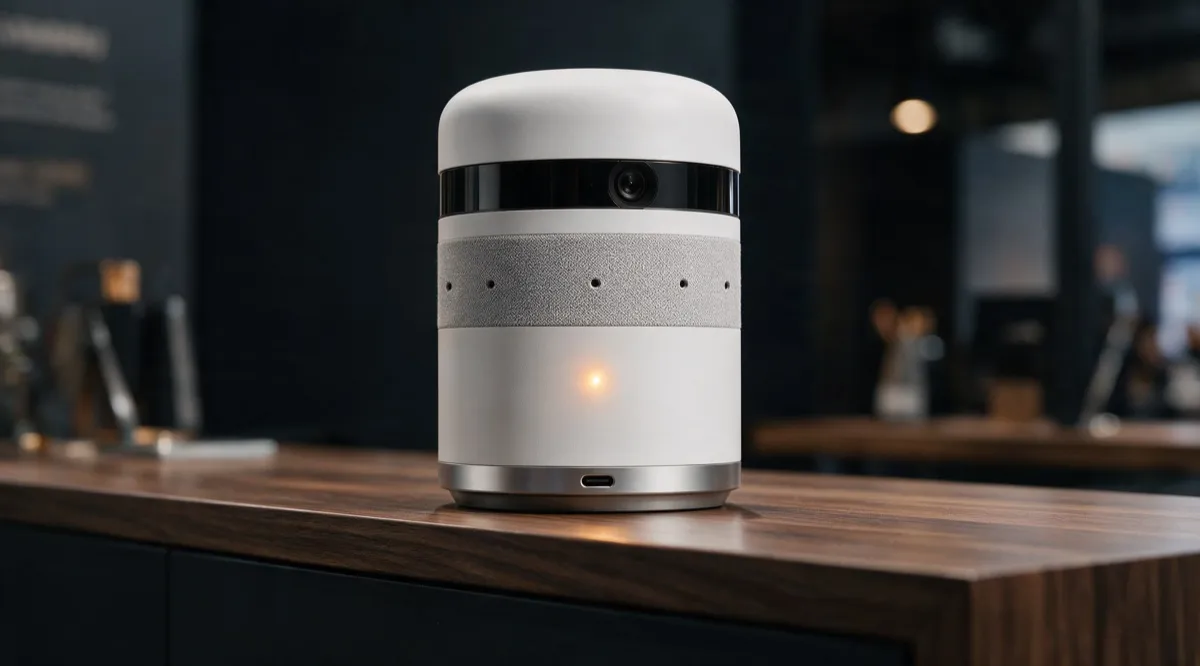
The practical consequence is narrower than it first appears. In Nevada the rep’s own participation is what does the legal work. A device capturing a conversation the rep is standing inside is a different object, legally, from a device left running across an empty counter while two visitors talk to each other. That distinction is not a detail. It is the whole basis on which the first arrangement holds, and a station that hears two tables at once has to be honest about which of the two it is doing at any given moment.
California asks whether the conversation was confidential
California Penal Code section 632 requires the consent of all parties, but only for a communication that qualifies as confidential, and whether a booth conversation qualifies is genuinely unsettled. Section 632 is real law and it is often quoted correctly. It is also frequently applied to a venue it does not govern.
Section 632(a) makes it an offence to, in the statute’s words, intentionally and without the consent of all parties to a confidential communication, use an electronic amplifying or recording device to eavesdrop upon or record that communication, expressly including parties together in person. A first offence carries a fine not exceeding two thousand five hundred dollars per violation and up to a year in county jail. Section 632(c) then removes from the definition of confidential communication any circumstance in which the parties may reasonably expect the communication to be overheard. The section was amended by Stats. 2016, Ch. 855, effective 1 January 2017 (California Legislative Information).
Subsection (c) is where a trade show lands, and it is arguable in both directions. An exhibition hall is loud, open, and walked through by strangers, which points one way. A seated conversation at a consultation table, about pricing and roadmap, points the other. No court has resolved it for an exhibit hall, and anyone telling you it is settled has not read the cases, because the cases do not exist.
Two things follow. A California show is genuinely a different compliance problem from a Nevada show. And an exhibitor building one internal policy for both has to build it to the stricter standard, which means designing for all-party consent whether or not a court would ultimately require it. That is the reasoning behind the questions worth putting to a capture vendor before you buy, several of which have no purpose other than establishing whether the vendor has thought about this at all.
Korea splits capture from storage, and one half carries a prison floor
Korean law answers the recording question and the retention question with two different statutes, and the recording statute reaches only a specific class of conversation. The class it reaches carries a minimum of one year’s imprisonment, which is severe by international comparison and worth stating before anything else.
통신비밀보호법, in the version in force from 1 August 2025 (법률 제20735호), prohibits at Article 3(1) and again at Article 14(1) the recording of 공개되지 아니한 타인간의 대화, meaning a conversation between other people that has not been made public. Article 14(1) reads that no person may record, or listen to by electronic or mechanical means, a non-public conversation between other people. Article 16(1) attaches the penalty: 1년 이상 10년 이하의 징역과 5년 이하의 자격정지, a minimum of one year’s imprisonment. The floor is imprisonment — not a fine. Article 16(1) item 2 separately criminalises disclosing the contents of a conversation obtained that way, which reaches any product that forwards a transcript onward. The text is at the 국가법령정보센터: https://www.law.go.kr/법령/통신비밀보호법
What the statute prohibits is recording a conversation between other people. That is the phrasing to keep, because Korean law contains no article affirmatively permitting a participant to record. The prohibition simply does not reach a conversation the recorder is part of. The counterpart matters just as much for a booth: a device left running on a counter that captures two visitors talking to each other, with no rep in the exchange, is recording 타인간의 대화, and that is the Article 16(1) case with its one-year floor. A booth device is not categorically safe, and the always-on ambient arrangement is precisely where the line gets crossed.
Storage is a separate statute. 개인정보 보호법, in force from 2 October 2025 (법률 제20897호), requires at Article 15(2) that consent be preceded by four disclosures: the purpose of collection and use, the items collected, the retention and use period, and the fact that consent may be refused together with any resulting disadvantage. Article 22(3) then places the burden of proof on the business: 동의 없이 처리할 수 있는 개인정보라는 입증책임은 개인정보처리자가 부담한다. The exhibitor proves the lawfulness, not the visitor.
One provision deserves attention because it refutes an assumption rather than supporting one. Article 25 governs fixed video devices in public places, and Article 25(5) states that such devices 녹음기능은 사용할 수 없다, the audio function may not be used, with no balancing test attached. An audio-only booth device falls outside Article 25’s device regime and lands on the general Article 15 collection rules instead. Nobody should read Article 25 as permission. Where Korea has legislated about a fixed recording device in a public place, it banned the microphone outright.
There is also a verified silence. A full-text search of 개인정보보호위원회’s 표준지침 (훈령 제115호, in force 30 April 2024) returns zero occurrences of 전시, 이벤트, 녹음 and 음성. Korea’s standard privacy guidance says nothing about exhibitions or about recording. An exhibitor looking for the rule written for their situation will not find one.
In Europe the sign is transparency, not a lawful basis
The European position contains one finding that cuts against the entire industry’s instinct: putting up a recording notice satisfies a transparency duty and does not, by itself, establish that the processing is lawful. Those are two different obligations under the GDPR, and meeting the first does not discharge the second.
Article 13 fixes the timing. The information duty attaches at the time when personal data are obtained, which for a booth means at the counter rather than in a follow-up email. Article 13(1) requires the controller’s identity, the purposes and the legal basis, the recipients, and transfer information; where the controller relies on legitimate interests, Article 13(1)(d) requires disclosure of the legitimate interests being pursued. Article 13(2) adds the retention period and the rights of access, rectification, erasure and objection (gdpr-info.eu). Article 5(1)(c) separately limits processing to what is adequate, relevant and limited to what is necessary, and Article 5(2) makes the controller responsible for demonstrating compliance.
The European Data Protection Board’s Guidelines 1/2024 on Article 6(1)(f), adopted 8 October 2024 as a version for public consultation and therefore still draft, set out three cumulative conditions: a legitimate interest, the necessity of the processing for that interest, and the absence of overriding interests or fundamental rights on the data subject’s side. Two paragraphs bear directly on a booth. Paragraph 52 states that the fact that certain types of personal data are commonly processed in a given sector does not necessarily mean that the data subject can reasonably expect such processing. Paragraph 53 states that the mere fulfilment of the information obligations set out in Articles 12, 13 and 14 GDPR is not sufficient in itself to consider that the data subjects can reasonably expect a given processing (EDPB, Guidelines 1/2024).
Read those two together and the industry’s default plan collapses. Everyone records at trade shows is not an argument, because common sector practice does not create reasonable expectation. And we put up a sign is not an argument either, because notice alone does not carry the balancing test. A visible indicator remains defensible as transparency and as good practice, and an indicator with no off switch is a stronger version of that practice than a laminated card. It is not a lawful basis, and no hardware feature can become one.
France’s CNIL raises the bar further, in guidance addressed to telephone recording for contract-proof purposes and published 25 April 2022, which applies to a booth only by analogy and should be labelled that way. CNIL states that absent enabling legal provisions the recordings ne peuvent être ni permanents ni systématiques, and that recording ne peut être déclenché par défaut, de manière automatisée, for all calls and for entire conversations. It recommends a two-stage notice: a spoken statement at the start of the conversation covering the existence of the system, the purpose, the possibility of proceeding without recording and the right of access, followed by a web address carrying the full text (CNIL). An always-on ambient device has a direct problem with the first of those sentences.
The four jurisdictions side by side
The table below is the shortest honest summary of the four bodies of law set out above, arranged so the difference between them is visible in one pass. Every row simplifies something, and that simplification is the reason the disclaimer sits at the top of this post rather than at the bottom of it.
| Jurisdiction | What the statute says | What it means at a booth | Source |
|---|---|---|---|
| Nevada, in person | NRS 200.650 prohibits surreptitious recording of a private conversation unless authorized by one of the persons engaging in it | The rep’s own participation is what makes the capture lawful. An unattended device recording visitors talking to each other loses that footing | nevada.public.law, NRS 200.650; RCFP Nevada guide, updated May 2020 |
| Nevada, telephone | NRS 200.620 governs wire communications; RCFP reads it as requiring the consent of all parties to a telephone call | A booth demo conducted over a speakerphone is a different legal question from the same conversation at the table | RCFP Nevada guide |
| California | Penal Code 632(a) requires all-party consent for a confidential communication; 632(c) excludes circumstances where the parties may reasonably expect to be overheard; first offence up to $2,500 per violation | Whether an exhibit hall conversation is confidential is unsettled, so the safe design is all-party consent regardless | California Legislative Information, as amended Stats. 2016, Ch. 855 |
| Korea, capture | 통신비밀보호법 Art. 3(1) and 14(1) prohibit recording a non-public conversation between other people; Art. 16(1) sets a penalty of one to ten years imprisonment. In force 1 Aug 2025 | Recording a conversation the rep is part of falls outside the prohibition. An ambient device catching two visitors does not | 국가법령정보센터 |
| Korea, storage | 개인정보 보호법 Art. 15(2) sets four mandatory disclosures before consent; Art. 22(3) places the burden of proof on the business; Art. 25(5) bars the audio function on fixed video devices. In force 2 Oct 2025 | Lawful capture does not make retention lawful, and the exhibitor has to be able to prove the basis | 국가법령정보센터 |
| European Union | GDPR Art. 13 requires notice at the moment of collection; Art. 5(1)(c) requires data minimisation; EDPB draft Guidelines 1/2024 paras. 52 and 53 say sector practice and notice alone do not establish reasonable expectation | The sign is necessary and not sufficient. The balancing test has to be documented separately | gdpr-info.eu; EDPB Guidelines 1/2024, 8 Oct 2024 |
Read down the third column and one pattern repeats in every jurisdiction. The question that decides the outcome is not whether hardware was present. It is whether the people in the conversation knew, and whether the recorder was one of them.
Nobody has litigated the trade-show floor
There is no case law addressing trade-show floors or exhibit halls, and no enforcement action involving audio recording at a commercial event was located in any of the four jurisdictions above. That is a verified absence rather than an omission, and it is the most useful single fact in this post.
Every exhibitor recording today is operating on analogy. The analogies available are telephone recording guidance, workplace surveillance decisions, and event photography advice, none of which was written with a consultation table in mind. Searches for a court applying a recording statute to an exhibit hall return general Fourth Amendment doctrine, which governs government actors and decides nothing about whether a private exhibitor may record a visitor.
The nearest live proceedings involve meeting software rather than hardware. Four putative class actions against Otter.ai were filed in the Northern District of California and consolidated as In re Otter.AI Privacy Litigation, No. 5:25-cv-06911, before Judge Eumi K. Lee: Brewer v. Otter.ai Inc., 5:25-cv-06911, filed 15 August 2025, pleading ECPA; Walker, 5:25-cv-07187, filed 26 August 2025, pleading Illinois BIPA; Theus, 5:25-cv-07462, filed 3 September 2025, pleading ECPA and California CIPA; and Winston, 5:25-cv-07712, filed 10 September 2025, pleading all three. The complaints allege that the product joins meetings and records the contents of conversations involving non-users without their consent, and that the vendor shifts the consent duty onto account holders. These are allegations in pending cases. No substantive rulings have been issued (National Law Review).
One thread from those filings reaches beyond software. Voice is a biometric identifier under Illinois BIPA, and courts are split on whether the statute reaches voice data that is never used to identify anyone. A system that transcribes without building a speaker model sits differently from one that separates speakers by voice. Illinois is outside this post’s scope and the question is open, so it is named here rather than answered.
None of this tells an exhibitor what a court would do with a booth. It tells them that the question has not been asked yet, which is a different and more uncomfortable position than the one most vendor FAQs describe.
The design answer that survives every reading
Across four jurisdictions with four different rules, one requirement appears in all of them and contradicts none: the people in the conversation should know, at the time, without being told twice. That is not a lawful basis on its own anywhere, and it is the only element that never becomes a liability under any reading above.
In Nevada that knowledge is good practice. In Korea it is evidence. In Europe it is an obligation with its own article number. Nowhere is it sufficient, and nowhere does it hurt.
Everything else varies. Nevada asks who was in the conversation. California asks whether it was confidential. Korea asks first whether the recorder was a participant, then separately whether the storage has a documented basis with the burden falling on the business. Europe asks for a documented balancing test and treats the notice as necessary but insufficient. A device policy cannot flatten that into one setting, and a vendor claiming otherwise is describing a product that does not exist.
What it does change is what an honest device looks like. Notice has to be physically present at the moment of capture rather than delivered afterward, which is Article 13’s timing requirement expressed as an object. It has to be something the exhibitor cannot quietly disable, because an indicator that the operator can switch off is a claim rather than a fact. And the capture ought to stop at the boundary of the space where the notice can be seen, which is one reason our own station stays fixed to the counter, and one reason the coverage holes are published rather than closed. A design constrained that way is worse at collecting — and easier to defend.
The residue is worth stating plainly. A recording that nobody objected to, in a jurisdiction that did not require them to object, is still only useful if the record of what was said survives the trip home and if the visitor can be told what was kept about them. Notice, minimisation and a limit you cannot exceed are the same three things a booth needs to be trusted and the same three things a regulator will ask about. The device that hears less than it could, and says so out loud while it is doing it, is the one whose answer does not change when the show moves to a different city.